Click to generate audioFirst play may take 10-15 seconds
At a Glance: Songnisan National Park (Gyeongbuk Section) offers stunning landscapes, diverse hiking trails, and rich cultural heritage all year round.
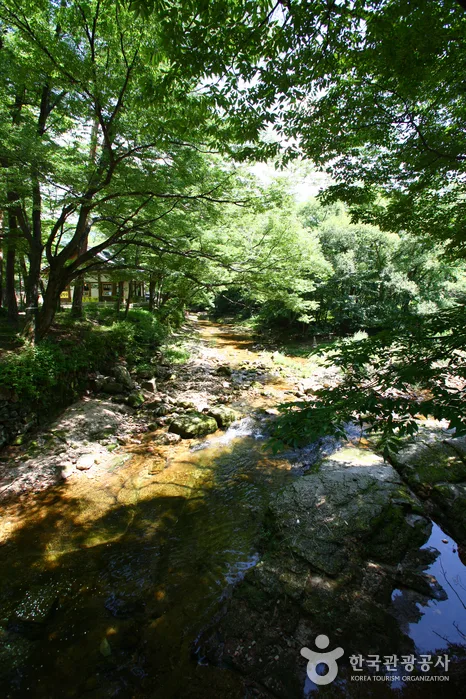
Many locals consider Songnisan National Park (Gyeongbuk Section) a cherished escape for both nature lovers and history buffs. The park is home to dramatic peaks, serene ponds, and ancient temples. Photography enthusiasts will find the views breathtaking at almost every turn.
What will you find at Songnisan National Park (Gyeongbuk Section)?
The park has Munjangdae Peak, standing at 1,054 meters above sea level, offering panoramic views of Cheonhwangbong Peak and other notable summits like Gwaneumbong and Birobong. This peak is expansive enough for 50 adults to sit comfortably on its rocky surface. Nearby lies Seokcheon Pond, a tranquil spot that never dries up.
Honestly, you can explore various hiking trails in the park ranging from 3.5 km to 8.5 km long. As you traverse these paths, keep an eye out for cultural landmarks like Janggakpokpo Falls and Seongbuksa Temple. The autumn foliage along the trails adds a splash of color that photographers will love.
When is the best time to visit Songnisan National Park (Gyeongbuk Section)?
The ideal times to visit are during spring and autumn when the weather is mild and the scenery is most vibrant. However, be aware that some walking trails close during specific periods: from March 2 to April 30 in spring and November 15 to December 15 in autumn.
If you’re planning your trip around fall foliage, late October tends to be peak season when leaves transform into brilliant shades of red and gold. A sunrise or sunset visit can also add a magical glow to your photos. Take that with a grain of salt though.
How can you reach Songnisan National Park (Gyeongbuk Section) by public transit?
If you’re using public transportation, buses run regularly from major cities nearby. From Sangju City, take bus routes that head towards Hwabuk-myeon, where you’ll find Osong parking lot as your entry point.
Driving is straightforward as well; it’s conveniently located with designated parking areas including Osong parking lot which charges ₩2,000 (about $1.50 USD) for small cars. Just remember that mid-sized cars incur slightly higher fees up to ₩5,000 (about $3.70 USD), while buses cost between ₩6,000-₩7,500 (about $4.40-$5.50 USD).
Any tips for first-time visitors?
Before heading out on your hike, stop by the Hwabuk Tourist Information Center for maps and guidance on current trail conditions—it’s worth it! Also note that restrooms are available throughout the park which can come in handy during longer hikes.
As you explore the area’s temples like Beopjusa Temple—where an admission fee applies—remember that modest attire is required while visiting these sacred sites. Lastly, calling staff in restaurants or shops can be easily done by saying “저기요” (jeogiyo). Trust me on this one; it’s how locals get service!