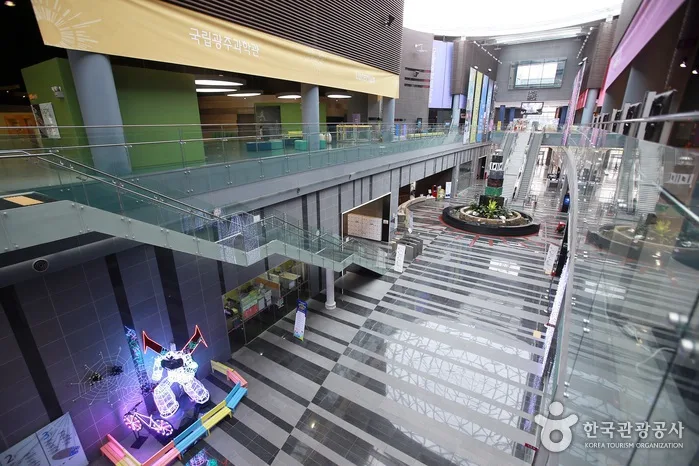
At a Glance: Gwangju National Science Museum offers hands-on science exhibits in a spaceship-shaped building, making it a fun stop for families and curious minds.
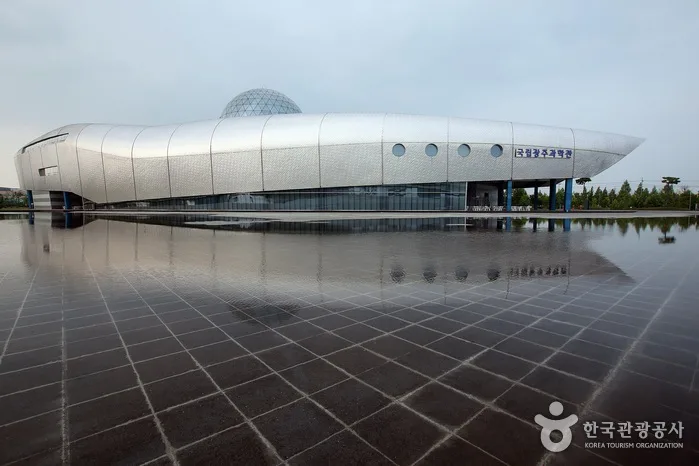
Visiting the Gwangju National Science Museum (국립광주과학관) on a sunny afternoon, I was immediately struck by its unique spaceship-shaped exterior. The modern design sets the tone for an engaging exploration of science. Upon entering, the vibrant atmosphere and interactive displays beckon visitors of all ages to dive into the world of science.
What is Gwangju National Science Museum and why does it matter?
The Gwangju National Science Museum opened its doors in 2013 with a mission to promote science through interactive learning. It’s particularly focused on light and its various applications, which is evident in many exhibits. This museum is not just about passive observation; it’s designed to inspire curiosity and creativity among visitors.
With an exhibition area of 7,209 square meters, there’s plenty to explore. The museum aims to make science accessible and fun, especially for children and young adults. If you have kids or are simply curious about scientific concepts, this place is well worth the visit.
A walkthrough of the main highlights
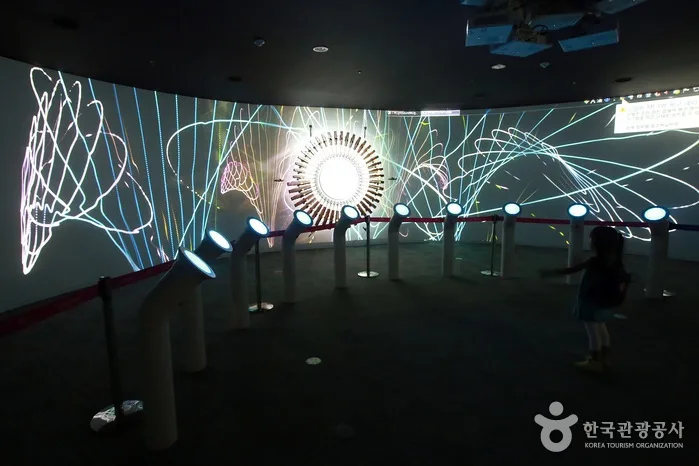
One of the first things you’ll notice is the hands-on programs scattered throughout the museum. These interactive exhibits encourage visitors to experiment and learn by doing. For example, you can manipulate light in various ways to see its effects firsthand. Honestly, this caught me off guard; I expected standard displays but found myself deeply engaged.
Look, the recommended duration for your visit is about four hours, which gives you ample time to explore everything at a leisurely pace. Admission fees are quite reasonable too: ₩3,000 (about $2.22 USD) for adults and ₩2,000 (about $1.48 USD) for children aged 7-19. Groups of 20 or more can enjoy discounted rates, making it an excellent option for school trips or family outings.
Is it engaging for non-Korean visitors?
You might be wondering whether language could be a barrier here. The good news is that many exhibits feature English translations alongside Korean descriptions. This makes it easier for non-Korean speakers to grasp the scientific concepts being presented.
While some programs may primarily cater to younger audiences, adults will also find plenty to stimulate their interest in science. One thing that bugged me a little was that some areas could have more detailed explanations for complex topics. Nevertheless, I still walked away with new insights.
Practical tips for your visit
The museum operates from 09:30 AM to 05:30 PM daily but closes on Mondays and major holidays like Seollal (Lunar New Year) and Chuseok (Korean Thanksgiving). Last admission is one hour before closing time, so plan accordingly.
If you’re driving, parking is available onsite with fees depending on vehicle size: ₩1,000 (about $0.74 USD) for compact cars and up to ₩4,000 (about $3 USD) for medium-sized vehicles. For those relying on public transport, check local bus routes or consider taking a taxi as the nearest subway stations may require additional travel time.
Photo Gallery


Essential Information
| Address | 235, Cheomdangwagi-ro, Buk-gu, Gwangju |
|---|---|
| Phone | +82-62-960-6210 |
| Website | www.sciencecenter.or.kr |
| Operating Hours | 09:30-17:30 * Last admission 1 hour before closing |
| Closed | Mondays, New Year’s Day, the day of Seollal (Lunar New Year’s Day) and Chuseok (Korean Thanksgiving Day) |
| Admission / Fee | Individuals – Adults 3,000 won / Children 2,000 won Groups – Adults 2,000 won / Children 1,500 won * Groups: 20 people or more |
| Parking | Available |
| Parking Fee | [Daily] Compact cars 1,000 won / Small-sized 2,000 won / Medium-sized 4,000 won |
| Inquiries | • 1330 Travel Hotline: +82-2-1330 (Korean, English, Japanese, Chinese) • For more info: +82-62-960-6210~2 |
| Duration | Approx. 4 hours |
| Scale | Total area: 98,248 ㎡ / Structure area: 17,325 ㎡ (B1-3F) / Exhibition area: 7,209 ㎡ |
| Map | View on Google Maps |
Additional Details
Reservation by phone available
Frequently Asked Questions
What are the operating hours of Gwangju National Science Museum?
The museum operates from 09:30 AM to 05:30 PM daily but is closed on Mondays and major holidays like Seollal and Chuseok.
How much does it cost to enter Gwangju National Science Museum?
Admission fees are ₩3,000 (about $2.22 USD) for adults and ₩2,000 (about $1.48 USD) for children aged 7-19.
Is parking available at Gwangju National Science Museum?
Yes, parking is available onsite with fees ranging from ₩1,000 (about $0.74 USD) for compact cars up to ₩4,000 (about $3 USD) for medium-sized vehicles.
Useful Korean Phrases
Tap to expand
Nearby Recommendations
Explore more places within 5km of this location
Nearby Restaurants
- No results found within 5km
Nearby Accommodation
- Top Cloud Hotel (탑클라우드호텔(광주점))1.1km57-1 , Imbangul-daero 825beon-gil, Gwangsan-gu, Gwangju
- Noble Stay Hotel (노블 스테이 (Noble Stay))1.5km19-7 , Imbangul-daero 826beon-gil, Gwangsan-gu, Gwangju
- Duzon Hotel A (더존호텔A)1.6km60-37 , Imbangul-daero 826beon-gil, Gwangsan-gu, Gwangju
Nearby Attractions
- Green Energy Experience Hall Gwangju-Jeonnam Regional Headquarters (녹색에너지체험관 (광주전남지역본부))782m123 Cheomdangwagi-ro, Buk-gu, Gwangju
- Ssangam Park (쌍암공원)1km39, Cheomdanjungang-ro 182beon-gil, Gwangsan-gu, Gwangju
- Syridan-gil Street (시리단길)1.5km19-20 Imbangul-daero 826beon-gil, Gwangsan-gu, Gwangju