Templestay is South Korea's best-kept secret for travelers craving real peace — stay overnight at a Buddhist temple, meditate with monks, eat incredible vegan food, and hit reset on your soul.
If someone asked me, “What’s the one thing I absolutely must do in Korea that isn’t K-pop or fried chicken?”, I’d say Templestay without hesitation. Seriously. I’ve sent so many of my foreign friends to do this, and every single one came back saying it changed something in them. In this guide, I’m going to walk you through everything — what Templestay actually is, what a typical day looks like, the best temples to pick, and all those little things I wish someone had told me before my first stay. Think of this as advice from a friend who’s been there, not a travel brochure.
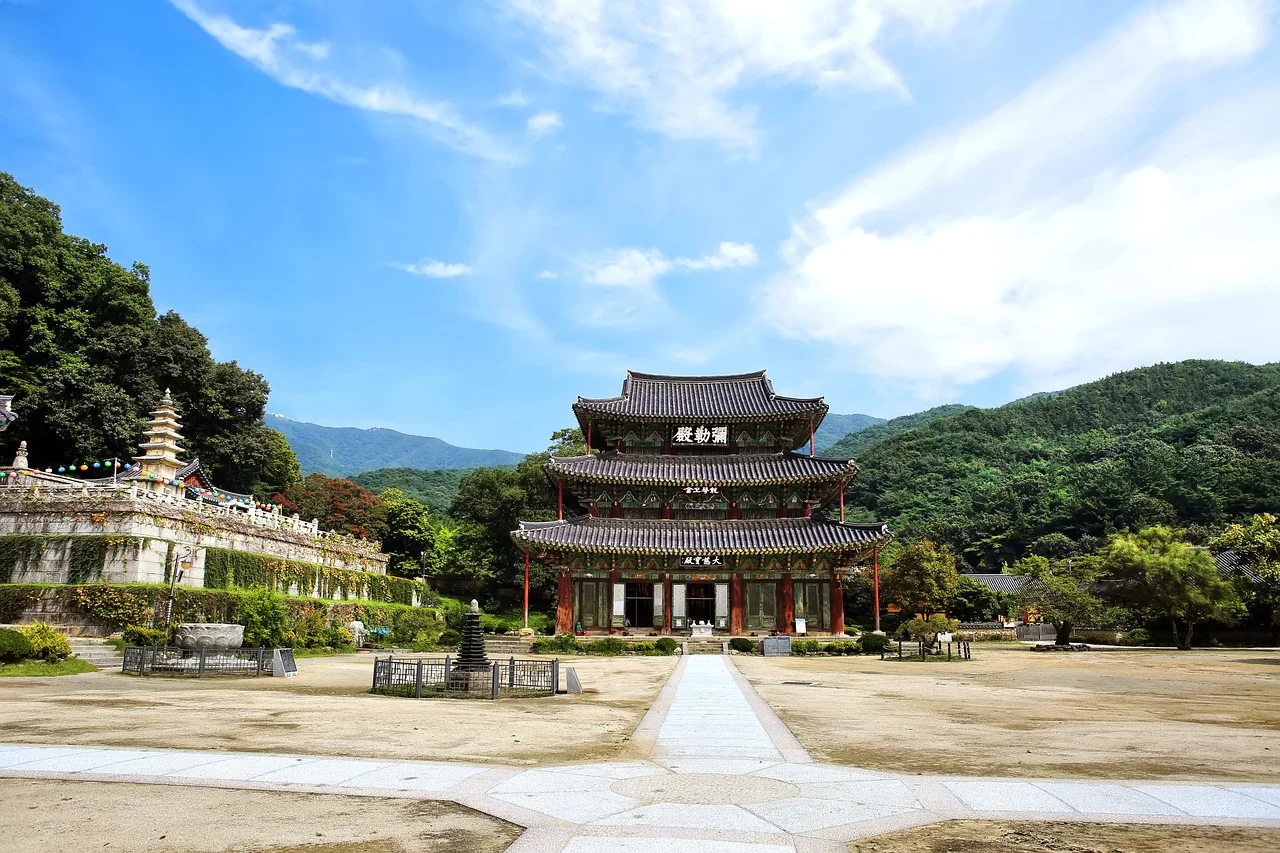
What exactly is a Templestay?
Templestay is a cultural immersion program where you stay overnight (or longer) at one of South Korea’s Buddhist temples and live the monastic life — just for a little while. You wake up early, chant with monks, sit in meditation, eat plant-based temple food in silence, and honestly? You come out feeling like you’ve been away for a week even if it was just one night.
The program drew a record 332,297 participants in 2024, including nearly 49,000 foreigners, according to South Korea’s Ministry of Culture, Sports and Tourism.[The Korea Times]
That’s a huge jump, and I can tell you it doesn’t surprise me one bit — word is spreading fast.
The program has roots going back to 2002, when the Jogye Order of Korean Buddhism — the largest Buddhist sect in Korea — established it to let visitors experience monastic life firsthand. But here’s what many people don’t realize: some temples, like Golgulsa in Gyeongju, had already been hosting visitors for a decade before that.
Is it a religious thing? Do I need to be Buddhist?
Not at all. I want to be very clear about this because I know it stops some people. You don’t need to be Buddhist, spiritual, or anything. I’ve seen atheists, Christians, Muslims — people from every background — do Templestay and love it. The monks don’t try to convert you. They just share their way of life and let you take what resonates. It’s more cultural than religious, and that’s what makes it so welcoming.
What does a typical Templestay day look like?
Okay, I’ll be real with you: the wake-up time is early. Like, really early. We’re talking 4 or 5 AM with the sound of a wooden moktak (a hollow drum monks use for chanting). The first time I heard it in the pre-dawn darkness, half asleep on a thin floor mat… it was surreal. Beautifully surreal.
Here’s roughly what you can expect on a standard overnight program:
Day 1 (Afternoon – Evening)
- Arrive and check in (usually around 2-3 PM)
- Change into your temple uniform (a loose, comfortable set — very Instagrammable, by the way)
- Temple tour with a guide or volunteer
- Evening meditation or 108 prostrations (bowing — a surprisingly physical workout!)
- Dinner: gorgeous temple food, eaten in mindful silence
- Free time to walk the grounds, journal, or just… breathe
Day 2 (Early Morning – Noon)
- 4:00-5:00 AM: Wake up to chanting
- Morning Buddhist ceremony (you can observe or participate)
- Breakfast in silence
- Tea time with a monk — this is the gem, trust me
- Cultural activity (lotus lantern making, woodblock printing, calligraphy)
- Check out around 11 AM – noon
That tea time with the monk? That’s the part my friends always talk about the most. It’s just you, a few other guests, a warm cup of tea, and a monk who answers your questions about life with a calmness that makes you want to cry. One of my friends asked a monk, “How do I stop worrying about everything?” and his answer was so simple and so perfect that she still thinks about it years later.
Which temples should you choose?
This really depends on what you’re after. Let me break down my favorites:
Best temples in Seoul (for convenience)
If you’re short on time and don’t want to leave the city, Seoul has several options. Seven temples in Seoul currently offer English-language Templestay programs: Bongeunsa, Geumsunsa, Hwagyesa, International Seon Center, Jinkwansa, Jogyesa, and Myogaksa. Visit Seoul
Bongeunsa Temple — Right in the heart of Gangnam, steps from COEX Mall. This temple was founded in 794 during the Silla Dynasty, making it over 1,200 years old. Wikipedia The contrast of ancient temple grounds surrounded by glittering skyscrapers is something else. They offer both one-day and overnight programs.
Hwagyesa Temple — Tucked at the foot of Bukhansan Mountain in northern Seoul. The temple provides a more nature-immersed retreat while still being accessible by public transportation. Odynovo Tours If you want that “mountain temple” feeling without leaving the city, this is your spot. Their overnight program is my personal favorite for Seoul.
My honest take: If you only have one day, Bongeunsa is unbeatable for location. If you can do an overnight, try Hwagyesa — it feels much more “away from it all.”
Best temples outside Seoul (for the full experience)
Golgulsa Temple (Gyeongju) — This one is special. Golgulsa is home to the oldest cave temple in the country and a sixth-century carved Buddha on Mount Hamwol. TravelAge West The unique thing here is Sunmudo, a Buddhist martial art that’s like yoga meets meditation meets gentle combat. They offer programs from one day to ten days. If you’re doing a Busan-Gyeongju trip, this fits perfectly into your route.
Baekyangsa Temple (Damyang) — Foodies, listen up. This is the temple made famous by the Netflix documentary “Chef’s Table,” where monk Jeong Kwan creates her renowned temple cuisine. TravelAge West You can learn about the spiritual philosophy behind temple food here. Booking can be competitive though — plan ahead.
How much does a Templestay cost?
Here’s the part that shocks everyone: it’s incredibly affordable.
Prices in 2025 range from about ₩30,000 to ₩50,000 (roughly $22–$37 USD) for a one-day program, and ₩60,000 to ₩100,000 ($44–$73 USD) for an overnight stay. In My Korea That includes accommodation, all meals, the uniform, and every activity. When you think about how much a decent hotel room in Seoul costs, this is a steal — and you get a life experience on top of it.
In 2025, the Korean government even launched a special English Templestay program for foreign visitors at just ₩30,000 per night, available at 47 temples across the country. The Korea Herald These kinds of subsidized programs pop up regularly, so it’s always worth checking the official website for deals.
What about the food?
Oh, the food. Let me gush for a second.
Temple food (사찰음식, sachal eumsik) is entirely plant-based — no meat, no fish, no eggs, and traditionally no garlic or onion either (these are considered stimulants in Buddhist practice). And before you think “that sounds bland,” let me stop you right there. Temple food is one of the most flavorful, intentional cuisines you’ll ever encounter.
Meals are usually buffet-style in a communal dining hall. You take only what you’ll eat — wasting food is a big no-no. Everything is seasoned with wild mountain herbs, fermented pastes, and ingredients grown by the monks themselves. The kimchi alone is worth the trip.
One important thing: meals are eaten in silence. At first, it feels awkward. Then it feels peaceful. Then you realize you’ve never actually tasted your food before. It’s a small revelation that sticks with you.
What should you bring? (And what should you leave behind?)
Here’s my packing advice from experience:
Bring:
- Basic toiletries (toothbrush, small towel — some temples provide these, but don’t count on it)
- Warm layers (temples can get chilly, especially in the mountains at 4 AM)
- An open mind and a willingness to wake up absurdly early
- A small notebook if you’re the journaling type — you’ll want to capture your thoughts
Leave behind:
- Heavy luggage (storage is minimal; bring a daypack)
- Expectations of hotel-style comfort (you sleep on a mat on a heated ondol floor)
- Alcohol and cigarettes (not permitted on temple grounds)
- Your need to check your phone every five minutes (most temples don’t ban phones, but you’ll naturally stop reaching for yours)
How do you book a Korean Templestay?
Booking is straightforward. Here are your options:
- Official Templestay website (eng.templestay.com) — Browse by region, language availability, and program type. This is the most comprehensive resource.
- Templestay Information Center in Insadong, Seoul — The staff speak English and can answer questions in person, which is great if you want personalized recommendations. In My Korea It’s right near Jogyesa Temple, which is worth visiting on its own.
- Direct email to the temple — For popular temples like Golgulsa, sometimes emailing directly is the easiest way to secure a spot.
Pro tip from a local: Book at least 2-4 weeks in advance, especially for weekend programs. With 158 temples currently participating in the program nationwide and many now offering foreigner-friendly experiences with multilingual staff The Korea Times, you have plenty of options — but the popular ones fill up fast.
FAQ
What is a Korean Templestay?
Templestay is a cultural immersion program where visitors stay overnight at a Korean Buddhist temple, experiencing monastic life — including meditation, chanting, tea ceremonies with monks, and plant-based temple food. It’s open to everyone regardless of religion or background.
How much does a Templestay cost?
Prices in 2025 range from ₩30,000–₩50,000 ($22–$37 USD) for a one-day program and ₩60,000–₩100,000 ($44–$73 USD) for an overnight stay. This includes accommodation, all meals, a uniform, and every activity. Special government-subsidized programs for foreigners are sometimes available at just ₩30,000 per night.
Do I need to be Buddhist to do a Templestay?
Not at all. Templestay is a cultural program, not a religious conversion experience. People of all faiths and backgrounds are welcome. The monks simply share their way of life and let you take what resonates with you.
Which temples in Seoul offer Templestay programs in English?
Seven temples in Seoul offer English-language programs: Bongeunsa, Geumsunsa, Hwagyesa, International Seon Center, Jinkwansa, Jogyesa, and Myogaksa. For overnight stays, Bongeunsa (in Gangnam) and Hwagyesa (near Bukhansan Mountain) are the top picks.
What is the daily schedule like during a Templestay?
You typically arrive in the afternoon, change into a temple uniform, join an evening meditation or 108 prostrations, and eat dinner in silence. The next morning starts around 4–5 AM with chanting, followed by breakfast, tea time with a monk, a cultural activity like lotus lantern making, and checkout by noon.
Can I skip activities I’m not comfortable with?
Yes. Participation is voluntary. You can skip the early morning chanting or 108 prostrations without judgment. That said, trying everything at least once is encouraged — stepping outside your comfort zone is part of the experience.
What is Korean temple food like?
Temple food is entirely plant-based with no meat, fish, eggs, garlic, or onion. It’s seasoned with wild mountain herbs and fermented pastes, and it’s surprisingly flavorful. Meals are buffet-style, eaten in communal silence, and you’re expected to take only what you can finish.
What should I bring to a Templestay?
Bring basic toiletries, warm layers (temples get cold early in the morning), an open mind, and a small daypack. Leave heavy luggage, alcohol, cigarettes, and expectations of hotel-style comfort behind. You’ll sleep on a mat on a heated ondol floor.
How do I book a Templestay?
Book through the official website at eng.templestay.com, visit the Templestay Information Center in Insadong (Seoul), or email your preferred temple directly. Reserve 2–4 weeks in advance, especially for weekend programs at popular temples.
When is the best time to do a Templestay?
Spring (April–May) offers cherry blossoms and lotus flowers, while autumn (October–November) brings stunning fall foliage around mountain temples. Winter stays are quietly meditative with snow-covered grounds. Every season has its own charm.
Useful Korean Phrases
Tap to expand
Summary of Key Points
- What it is: An overnight cultural program at a Korean Buddhist temple, open to everyone regardless of religion
- Cost: ₩30,000–₩100,000 ($22–$73 USD), including meals, accommodation, and all activities
- Best for Seoul: Bongeunsa (central Gangnam) or Hwagyesa (near Bukhansan Mountain)
- Best outside Seoul: Golgulsa (Gyeongju) for martial arts, Baekyangsa (Damyang) for temple cuisine
- How to book: eng.templestay.com or visit the Information Center in Insadong, Seoul