This Seoul to Busan itinerary covers Days 5-7 of your Korea trip—experience stunning beaches, colorful hillside villages, fresh seafood markets, and UNESCO World Heritage sites in Gyeongju, all connected by KTX high-speed train.
This is Part 2 of our 7-Day Korea Itinerary for First-Time Visitors. If you haven’t checked out Days 1-4 in Seoul yet, head over to Part 1: Seoul first—it covers Gyeongbokgung Palace, Bukchon Hanok Village, the DMZ, Hongdae, and all the best spots to kick off your Korea adventure.
Now, on Day 5, Seoul to Busan Itinerary, you’ll leave Seoul behind and head south to Busan. The KTX gets you there in just 2.5 hours, so even if you catch a morning train, you’ll have the whole afternoon to explore.
Day 5: Seoul to Busan (KTX, Haeundae & Gwangalli)
How Should I Get from Seoul to Busan?
Take the KTX from Seoul Station. It’s fast (2.5 hours), comfortable, and drops you right in central Busan. Leave in the morning, and you’ll have the entire afternoon to explore.
Now, about transportation costs—I’ve been there. When I traveled through Europe, language barriers and expenses made me appreciate Eurail Pass. Korea has something similar for foreign visitors: the KORAIL PASS.
Here’s my honest take: if the price difference between individual tickets and the pass isn’t huge, I’d recommend the pass for the convenience alone. No fumbling with ticket machines, no language stress, just one pass that covers everything. But everyone’s budget is different, so check out my separate KORAIL PASS Guide to decide what works best for you.
Alright, ready to head to Busan?
Morning: KTX to Busan
Catch a morning KTX from Seoul Station to Busan Station. Once you arrive, drop your bags at your accommodation (most hotels and guesthouses offer luggage storage even before check-in).
Afternoon: Haeundae Beach + Haedong Yonggungsa Temple
Haeundae is Busan’s most famous beach. Take a stroll along the shore, feel the sea breeze, and soak in the coastal atmosphere that Seoul simply doesn’t have.
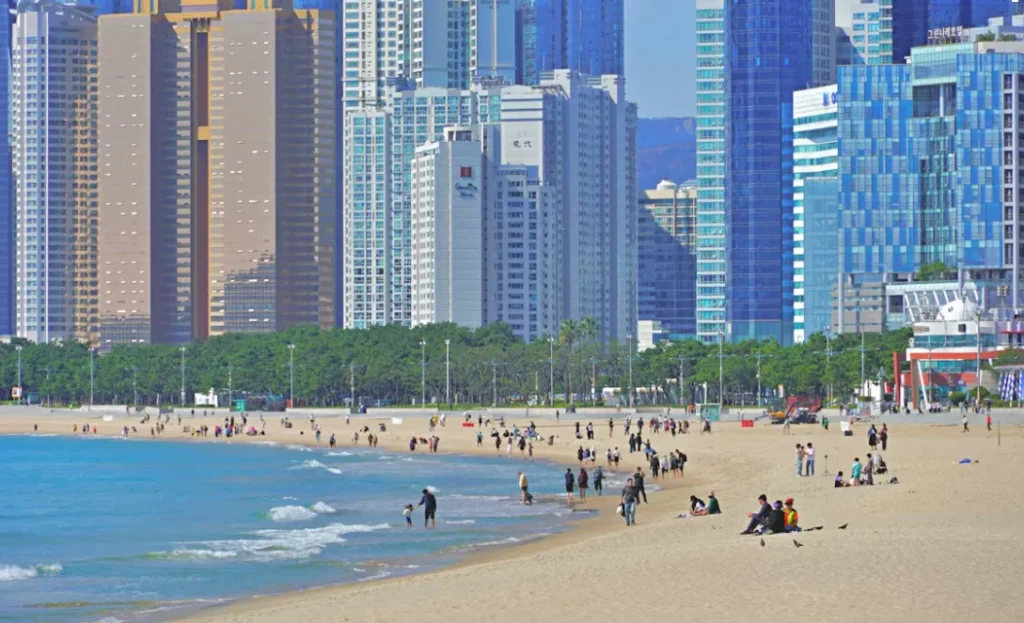
After the beach, head to Haedong Yonggungsa Temple. Unlike most Korean temples hidden in mountains, this one sits dramatically on ocean cliffs. It’s one of the most photogenic temples in all of Korea—especially at sunrise, though late afternoon light is beautiful too.
Getting there: From Haeundae, take Bus 181 to Yonggungsa Temple (about 30 minutes).
Evening: Gwangalli Beach Night View
End your day at Gwangalli Beach, famous for its view of the illuminated Gwangan Bridge. The beachfront is lined with cafes and restaurants where you can enjoy:
- Hoe (Korean-style sashimi)
- Ssiat Hotteok (Busan’s famous seed-filled sweet pancake)
Grab a seat facing the ocean, order some fresh fish, and watch the bridge light up as the sun sets. Busan’s night sea has a completely different energy from Seoul’s urban nightscape.
Day 6: Exploring Busan (Gamcheon, Jagalchi & BIFF Street)
Morning: Gamcheon Culture Village
Often called “Korea’s Santorini,” Gamcheon Culture Village is a hillside neighborhood filled with colorful houses, murals, and art installations. Every alley offers a new photo opportunity.
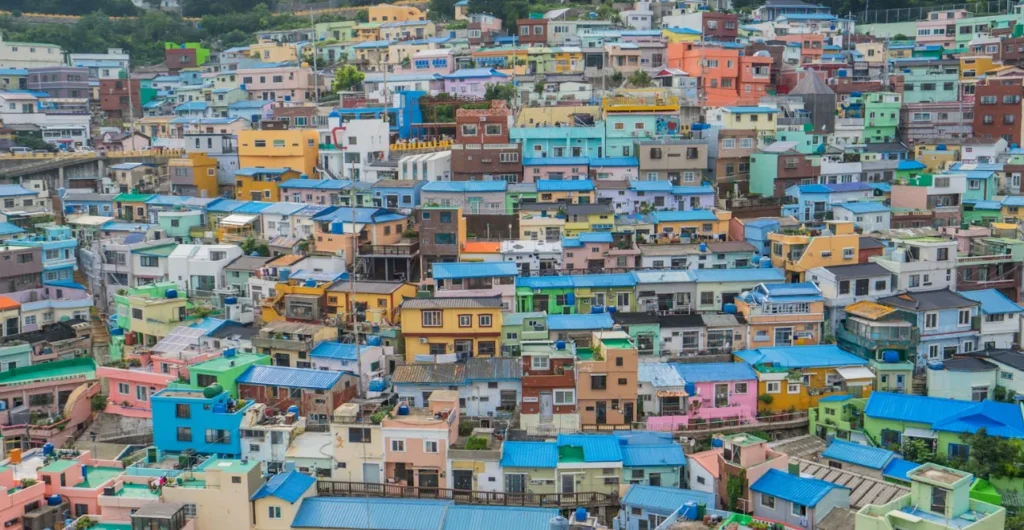
Pro tip: Arrive early around 9 AM to avoid crowds. The village gets packed by midday, especially on weekends.
Getting there: Take Bus 1-1, 2, or 2-2 from Toseong Station (Line 1) to Gamcheon Elementary School stop.
Lunch: Jagalchi Fish Market
Jagalchi Market is Korea’s largest seafood market, and lunch here is an experience in itself.
Here’s how it works:
- Browse the first floor and pick your fish (vendors will slice it fresh)
- Take it upstairs to the second floor
- Pay a small fee, and they’ll serve it with all the side dishes
It’s interactive, fun, and incredibly fresh. Don’t be intimidated—just point at what looks good.
Afternoon: BIFF Street + Gukje Market + Nampodong
Walk off lunch at BIFF Street (Busan International Film Festival Street). The main attraction here? Street food. Try the famous hotteok and ssiat hotteok—you’ll see the lines.
Right next door is Gukje Market (International Market). This market was started by refugees after the Korean War and offers a glimpse into Korea’s modern history. It’s a maze of shops selling everything from vintage goods to hanbok (traditional clothing).
Evening: Seomyeon Food Alley or Nampodong
For dinner, skip the tourist spots and head to Seomyeon, where locals actually eat. The food alley here is packed with restaurants serving:
- Dwaeji-gukbap (pork rice soup)—Busan’s signature comfort food
- Milmyeon (cold wheat noodles)—perfect for summer
Day 7: Gyeongju Day Trip → Return to Seoul
Why Should I Visit Gyeongju?
Gyeongju was the capital of the Silla Kingdom for nearly 1,000 years. Today, the entire city feels like an open-air museum—ancient tombs sit in the middle of downtown, thousand-year-old temples dot the hillsides, and UNESCO World Heritage sites are around every corner.
If you have any interest in Korean history, Gyeongju is unmissable.
Morning: Busan to Gyeongju
Two options:
- Mugunghwa train: About 1.5 hours from Busan Station to Gyeongju Station
- Bus: About 1 hour from Busan Central Bus Terminal
Both are covered if you have the KORAIL PASS (train) or KORAIL PASS+ (bus).
Morning to Afternoon: Gyeongju Highlights
Bulguksa Temple
A UNESCO World Heritage Site and the finest example of Silla-era architecture. The stone pagodas and bridges here are over 1,200 years old. If you visit in autumn, the fall foliage is spectacular.
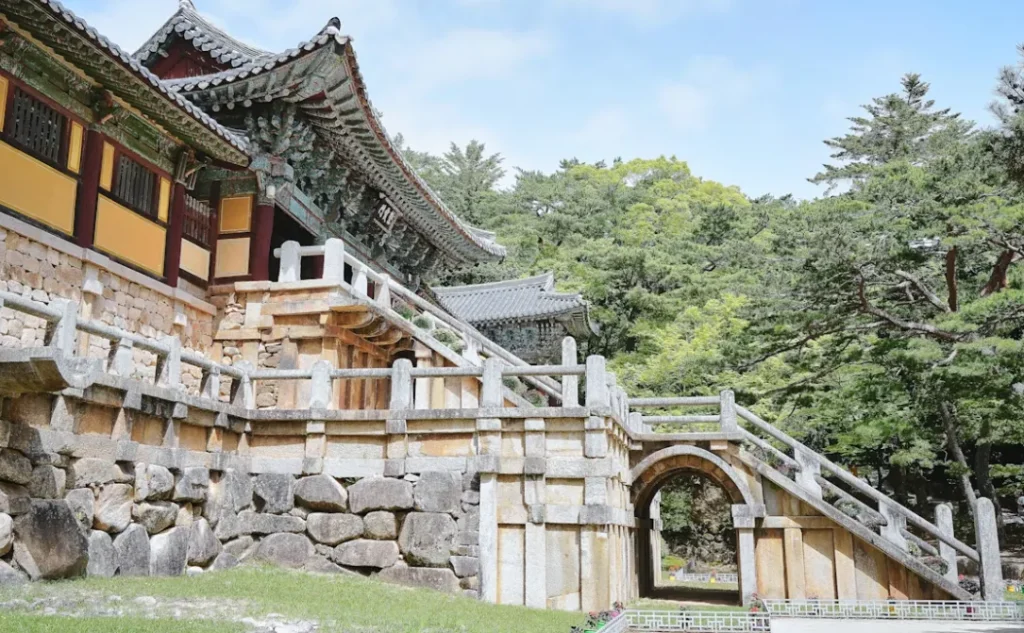
Seokguram Grotto
A short bus ride from Bulguksa takes you up the mountain to Seokguram, a stone grotto housing a serene Buddha statue overlooking the East Sea. The craftsmanship is extraordinary—many visitors find it genuinely moving.
Tip: Buses connect Bulguksa and Seokguram regularly. Plan about 3-4 hours for both sites.
Daereungwon (Tumuli Park & Cheonmachong)
Back in central Gyeongju, Daereungwon is a royal tomb complex right in the middle of the city. You can actually walk on top of these grass-covered burial mounds and look out over the city. Cheonmachong (Heavenly Horse Tomb) is open to enter, showing how Silla royalty were buried.
Cheomseongdae Observatory
The oldest astronomical observatory in East Asia still standing. It’s small but significant, and particularly atmospheric when lit up at night.
Lunch in Gyeongju
- Hwangnam-ppang: A traditional Korean pastry filled with sweet red bean paste—Gyeongju’s most famous souvenir. Buy a box to take home.
- For a proper meal, try hanjeongsik (Korean set meal) or sundubu-jjigae (soft tofu stew) at a local restaurant.
Evening: Return to Seoul
You have two options:
Option A: Gyeongju → Busan → Seoul
- Return to Busan Station by train or bus
- Take KTX from Busan to Seoul (2.5 hours)
Option B: Gyeongju → Seoul (Direct)
- Take KTX directly from Singyeongju Station to Seoul (2 hours)
- Faster, but Singyeongju Station is outside the city center
Choose based on your timing and what you want to see before leaving.
FAQ
How long does it take to get from Seoul to Busan by KTX?
The KTX takes just 2.5 hours from Seoul Station to Busan Station. If you catch a morning train, you’ll have the entire afternoon to explore Busan. It’s fast, comfortable, and drops you right in central Busan.
Should I buy the KORAIL PASS or individual train tickets?
If the price difference isn’t huge, the KORAIL PASS is worth it for convenience alone—no fumbling with ticket machines or language barriers. But it depends on your budget and itinerary. Check out our separate KORAIL PASS Guide to compare costs and decide what works best for you.
What is Haeundae Beach known for?
Haeundae is Busan’s most famous beach, known for its long sandy shoreline and coastal atmosphere. It’s the perfect spot to take a stroll, feel the sea breeze, and experience a completely different vibe from Seoul’s urban landscape.
What makes Haedong Yonggungsa Temple special?
Unlike most Korean temples hidden in mountains, Haedong Yonggungsa sits dramatically on ocean cliffs. It’s one of the most photogenic temples in Korea, especially beautiful at sunrise or late afternoon. From Haeundae, take Bus 181 (about 30 minutes).
What should I eat at Gwangalli Beach?
Gwangalli is famous for fresh hoe (Korean-style sashimi) and ssiat hotteok (Busan’s signature seed-filled sweet pancake). Grab a seat at a beachfront restaurant, order fresh fish, and watch the Gwangan Bridge light up at sunset.
What is Gamcheon Culture Village?
Often called “Korea’s Santorini,” Gamcheon Culture Village is a hillside neighborhood filled with colorful houses, murals, and art installations. Every alley offers a photo opportunity. Arrive early around 9 AM to avoid crowds, especially on weekends.
How does Jagalchi Fish Market work?
It’s interactive and fun. Browse the first floor, pick your fish (vendors slice it fresh), then take it upstairs to the second floor where they serve it with side dishes for a small fee. Don’t be intimidated—just point at what looks good.
What is BIFF Street in Busan?
BIFF Street (Busan International Film Festival Street) is famous for street food, especially hotteok and ssiat hotteok. Right next door is Gukje Market, started by Korean War refugees, offering vintage goods, hanbok, and a glimpse into Korea’s modern history.
Where do locals eat in Busan?
Skip the tourist spots and head to Seomyeon food alley. Try dwaeji-gukbap (pork rice soup)—Busan’s signature comfort food—or milmyeon (cold wheat noodles), perfect for summer. It’s cheaper and tastier than tourist area restaurants.
Why is Gyeongju called a “museum without walls”?
Gyeongju was the Silla Kingdom’s capital for nearly 1,000 years. Ancient tombs sit in the middle of downtown, thousand-year-old temples dot the hillsides, and UNESCO World Heritage sites are everywhere. The entire city feels like an open-air museum.
How do I get from Busan to Gyeongju?
Two options: Mugunghwa train (about 1.5 hours from Busan Station) or bus (about 1 hour from Busan Central Bus Terminal). Both are affordable and convenient. The train is covered by KORAIL PASS, and buses work with KORAIL PASS+.
What are the must-see sites in Gyeongju?
The top four are: Bulguksa Temple (UNESCO World Heritage, stunning Silla-era architecture), Seokguram Grotto (serene Buddha statue overlooking the East Sea), Daereungwon/Cheonmachong (royal tomb complex you can walk on), and Cheomseongdae (East Asia’s oldest astronomical observatory).
How much time do I need for Bulguksa and Seokguram?
Plan about 3-4 hours for both sites. Buses connect Bulguksa and Seokguram regularly. The stone pagodas at Bulguksa are over 1,200 years old, and the Buddha statue at Seokguram is genuinely moving to see in person.
What is Hwangnam-ppang?
Hwangnam-ppang is Gyeongju’s most famous souvenir—a traditional Korean pastry filled with sweet red bean paste. Buy a box to take home. For a full meal in Gyeongju, try hanjeongsik (Korean set meal) or sundubu-jjigae (soft tofu stew).
What’s the best way to return to Seoul from Gyeongju?
Two options: Return to Busan Station and take KTX to Seoul (2.5 hours total), or take KTX directly from Singyeongju Station to Seoul (2 hours, faster but the station is outside city center). Choose based on your timing and schedule.
Useful Korean Phrases
Tap to expand
Summary of Key Points
Day 5: KTX to Busan (2.5 hrs), Haeundae Beach, Haedong Yonggungsa Temple, Gwangalli night view
Day 6: Gamcheon Culture Village, Jagalchi Fish Market, BIFF Street, local dinner at Seomyeon
Day 7: Gyeongju day trip (Bulguksa, Seokguram, Daereungwon, Cheomseongdae), return to Seoul
Transportation: Consider KORAIL PASS for convenience; add KORAIL PASS+ for subway/bus coverage
Food highlights: Hoe (sashimi), dwaeji-gukbap, ssiat hotteok, Hwangnam-ppang
1 thought on “Seoul to Busan Itinerary: 3-Day Guide to Busan & Gyeongju (Days 5-7)”